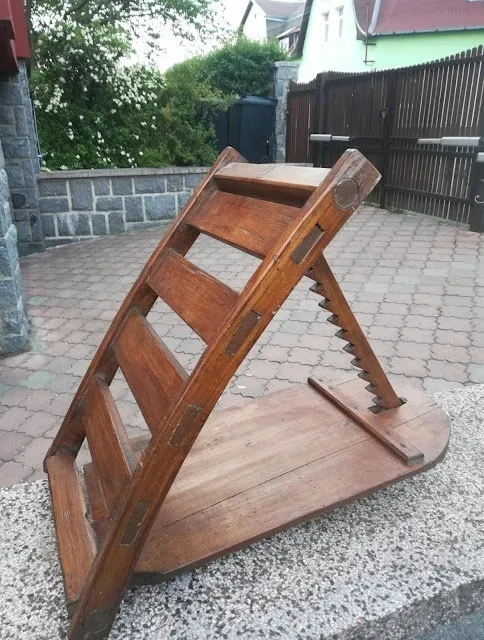
You’ve discovered more than an antique—you’ve found a testament to a quieter way of living. This weathered wooden cheese press, with its smooth-worn surfaces and purposeful design, carries the weight of generations who understood that the finest things in life cannot be rushed.
What It Is: A Tool of Transformation
This is a traditional wooden cheese press—a cornerstone of farmhouse kitchens from the 18th through early 20th centuries. Crafted from dense hardwoods like maple, oak, or beech, its sole purpose was alchemy: transforming fresh milk curds into wheels of aged cheese through the gentle, persistent force of time and pressure.
How it worked:
Fresh curds were wrapped in cheesecloth and placed inside a cylindrical mold. The press’s screw or lever mechanism then applied steady, adjustable pressure over hours—sometimes days—slowly coaxing out whey while binding the curds into a dense, sliceable form.
Why wood?
Hardwood offered three gifts: natural antimicrobial properties, durability against constant moisture, and subtle breathability through its grain—essential for the aging process.
The Story Worn Into the Wood
Look closely. Those dark stains aren’t flaws—they’re the ghosts of a hundred batches of cheese, the absorbed whey that seeped into the grain over decades of use. Those smooth edges weren’t carved that way; they were polished by countless hands, generation after generation.
This press wasn’t bought at a general store. It was likely made by a local craftsman or by the farmer himself, using wood from the land he worked. Every piece was unique, shaped by the materials at hand and the specific needs of the household.
A Slice of Domestic History
Before refrigeration, before grocery stores, before mass production, families had to preserve their own food. A cow or two provided more milk than a family could drink—so they turned it into cheese.
The cheese press was essential farmstead equipment, as common as a butter churn or a flour bin. It sat in the cool corner of the pantry or the cellar, quietly doing its work while the family went about their day.
A single wheel of cheese could feed a family through the winter months.
How to Identify an Antique Wooden Cheese Press
| Feature | What to Look For |
|---|---|
| Wood type | Dense hardwoods (maple, oak, beech, walnut) |
| Joinery | Mortise and tenon, dovetails, or pegged joints (no nails) |
| Wear patterns | Smooth, worn surfaces from use; dark stains from whey absorption |
| Patina | Rich, dark color from age and use—not paint |
| Mechanism | Wooden screw threads or iron screw with wooden handle |
| Provenance | Often unmarked, but regional characteristics can indicate origin |
What It’s Worth—And Why That’s Not the Point
LOOK NEXT PAGE
For Complete Cooking STEPS Please Head On Over To Next Page Or Open button (>)

Wrap potatoes in tin foil and put in crock pot. Enjoy this lip-smacking result

3-Ingredient Beef Cracker Bites

Low-Carb Chocolate Peanut Butter Cloud

How to Cook Corn on the Cob with Just 2 Simple Ingredients: The Secret to the Sweetest, Most Flavorful Summer Corn

Two ingredients Reed Diffuser